I’m excited to launch a short series of pie recipes on my blog! Like many of my recipes, these pies reflect my roots, blending fond memories with the familiar smells and aromas of Balkan cuisine.
The first recipe I will share is my mum’s famous leek and cheese pie. It’s a family classic, and whenever we visit Serbia, my mum makes it for us. My sons always look forward to enjoying their grandmother’s staple dishes. A few summers ago, I spent time making it with her for the first time, and I’ve been practicing ever since. It brings me joy to make it and to share this special treat with my family.
This isn’t just a culinary exercise; it’s also an adventure that can help heal your mind and relieve stress. In my cookbook, *Baking in Harmony: Modernized Balkan Cuisine*, co-authored by my husband, Dr. Boban Simonovic, you will find guidance on how to overcome stress through baking. You can learn about his expertise here.
The pastry has an irresistible crunchiness, thanks to the multiple layers created using my mum’s perfected method from the past forty years. This crunchiness is beautifully complemented by the slightly sharp flavour of sautéed leeks and cheese. The addition of mixed eggs provides the necessary fluffiness, making this humble pie a perfect blend of textures and flavours.
So, what exactly is a Balkan-style pie?

Imagine working with filo (or phyllo) sheets, which you can roll out by hand for a therapeutic baking experience, or you can opt for convenient store-bought options.
As you prepare your filo, brush it with melted butter or olive oil, and consider sprinkling some brown sugar if you’re making a sweet pie. The flavour possibilities are endless! You can choose to create a vegan or vegetarian pie, or one filled with minced meat—just decide whether your craving leans toward sweet or savoury.
When I’m in the mood for something sweet, I typically choose from apple (which I’ll be featuring here), cherry, or pumpkin pies. You can find recipes for cherry and pumpkin pies in my cookbook, *Baking in Harmony: Modernised Balkan Cuisine*, alongside savoury pie recipes made with either homemade or store-bought filo. If you’re feeling adventurous, you might also try your hand at making Baklava—the possibilities are endless! Learn more about my cookbook **here**.
Meanwhile, my husband and our sons always prefer savoury pies. Our favourite combinations include cheese and eggs paired with sautéed leeks, or my husband’s go-to mix of spinach and cheese. You can find instructions for making a meat pie and rolling it like a börek in my cookbook, *My Sisters’ Cookbook: Food and Menopause*.
The last decision you need to make is how to shape or roll your pastry, or perhaps just stack the layers of butter- or oil-brushed pastry with your chosen filling.
If you love the flavour combination of sautéed leeks and cheese, you simply must try my mum’s pie.
Let’s dive into the first recipe in this series!
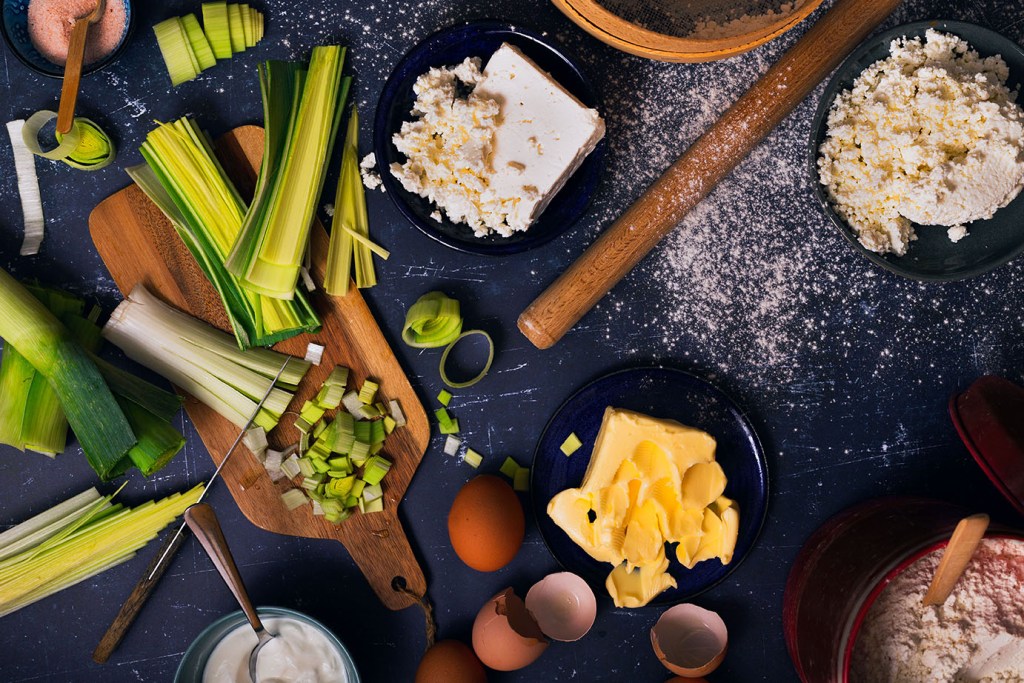

Authentic Balkan Leek and Cheese Filo Pie Recipe
Authentic Balkan Leek and Cheese Filo Pie Recipe
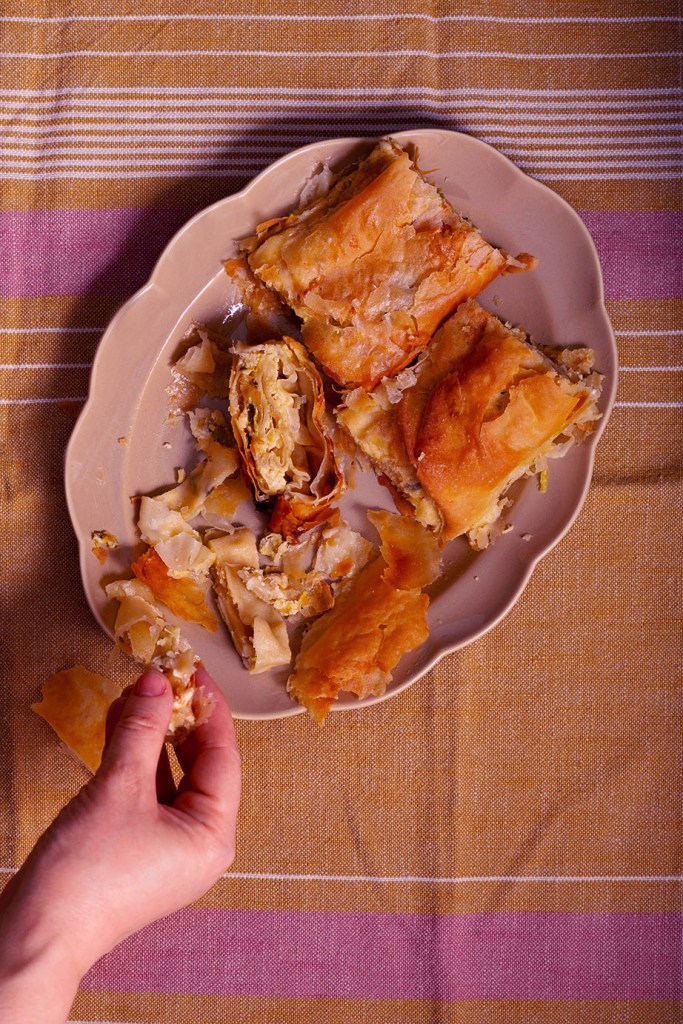
Homemade authentic Balkan leek and cheese pie with layers of flaky filo pastry with sautéed leeks, cheese, and eggs.
ingredients for the dough:
- 750g strong bread flour, plus extra for kneading and rolling
- 450ml slightly warmed water
- 1tsp salt
ingredients for the filling:
- 2-3 leeks, or around 500g
- 5tbsp olive oil
- 2tsp salt
- 250g curd cheese
- 250g feta, crumbled
- 4 large eggs, whisked until foamy and increased in volume
- 2tbsp Greek yoghurt
Also:
- Around 200g soft butter, plus a little bit of extra cold butter for the finishing touch
- Large saucepan
- A long rolling pin, approximately 50cm in length, as shown in the photos
- 2 large mixing bowl, one for the dough and one for the filling
- Large baking trey, lined

instructions:
Take the butter out of the fridge to soften up.
the filling:
Begin by preparing the leeks.
1. Cut the tops of both ends and then in the middle, separating whites and greens. Slice each half lengthways and rinse thoroughly under running water, ensuring you remove any soil trapped between the layers. Make incisions no wider than 1cm along the long side. Hold the strips with one hand and dice them into roughly 1cm pieces.
2. In a large saucepan, combine the diced leeks with olive oil and a pinch of salt. Sauté over medium-low heat, stirring occasionally, until the leeks are very tender. Taste and adjust the seasoning if necessary.
3. Transfer the cooked leeks to a bowl and allow them to cool to room temperature.
Once the leeks have cooled, you can commence with the dough preparation.
the dough:
1. In a large mixing bowl, measure out the flour and stir in the salt.
2. Warm up the water until it is just warm to the touch, then pour it over the flour. Use your hands to gently mix the flour and water together. The ratio of water to flour has been thoroughly tested, ensuring a perfectly smooth consistency.
3. Once the ingredients are combined, transfer the dough to a floured working surface and continue kneading. Keep kneading for a little while longer, even when the dough already feels smooth and almost silky.
4. Allow the dough to rest for a bit on the floured surface, covered with a clean tea towel or the bowl used to mix it.
Now, proceed with the filling.
1. In a second mixing bowl, whisk the eggs until they become foamy, and their volume has increased.
2. Fold in the remaining ingredients: leeks, curd cheese, and feta cheese.
It’s time to roll out the pastry.
1. If you have butter that has been taken out of the fridge, it is likely soft and spreadable. If you’ve forgotten to take it out in advance, you can use a microwave to soften it. Just be careful not to melt it completely or make it hot.
2. Next, divide the dough into four equal parts, and then split each quarter into three pieces. This will give you a total of 12 pieces that need to be shaped into neat balls.
Use this method to shape smooth dough balls:
1. Begin by rolling out the first ball of dough into a disc the size of a CD.
2. Spread butter over the surface and lightly dust with flour. We shall create a stack of three discs.
3. Next, roll out a second disc. Butter one side, dust with flour, and place it atop the first disc, ensuring the buttered sides are facing each other.
4. Then, butter and flour the exposed upper surface of this second disc.
5. For the third and final disc, butter only one side. This buttered side should face the buttered surface of the second disc when stacked. Leave the top side of this third disc unbuttered, as it will act as the lid of your stack (refer to the photo below for visual guidance).
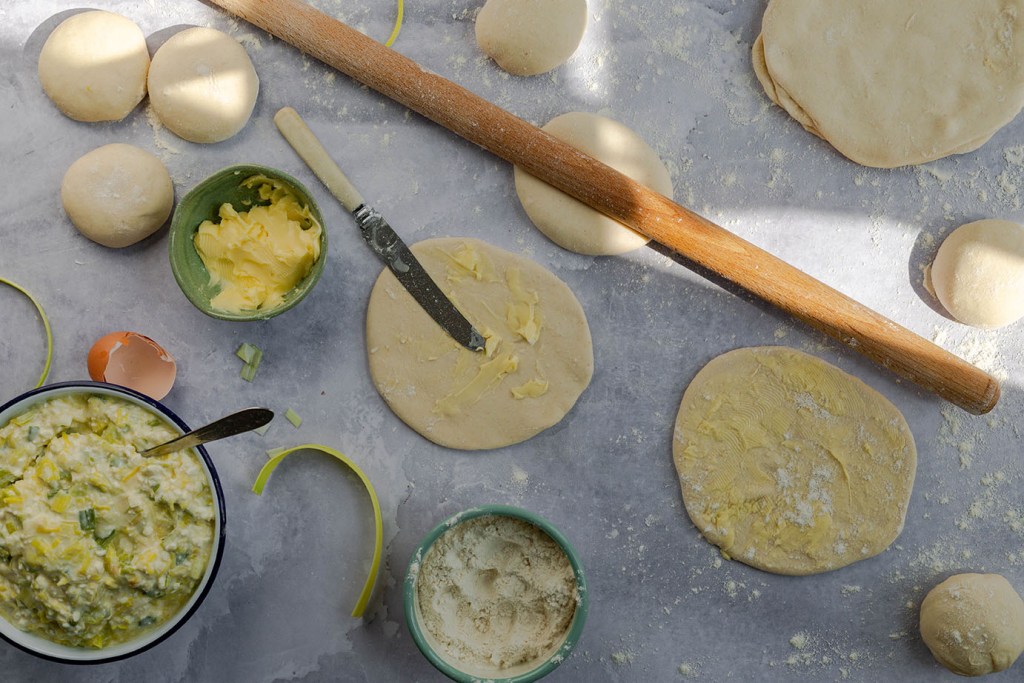
Proceed by following these steps:
- Repeat the process with the remaining dough balls, creating four stacks in total.
- Roll out each stack into a thin, round filo sheet approximately 45cm in diameter.
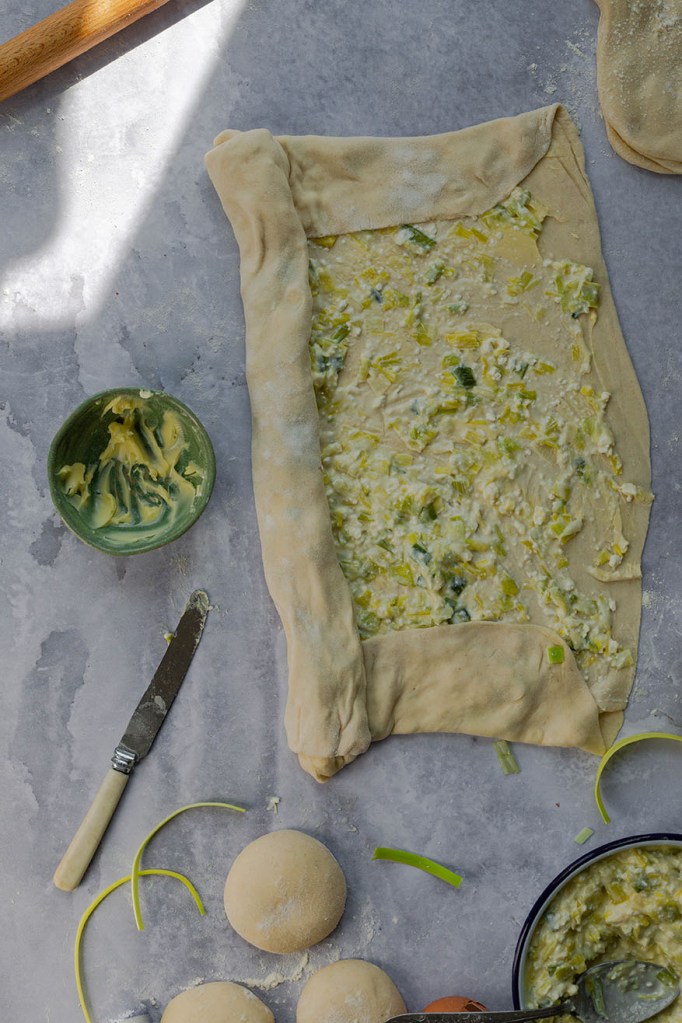
- Thinly spread butter over each sheet and scatter the filling. Fold the sheets as shown in the accompanying photo to form logs. Place the logs on a lined baking tray.
- Before rolling the final sheet, preheat the oven to 200°C with the fan on.
- Just before placing the tray in the oven, dot the logs with small pieces of cold butter.
- Transfer the tray to the oven and reduce the temperature to 170°C with the fan on. Bake for one hour, then check for a golden-brown colour. Continue baking if necessary.
- Allow the pastries to rest briefly before serving, although it may be tempting to tuck in straight away!
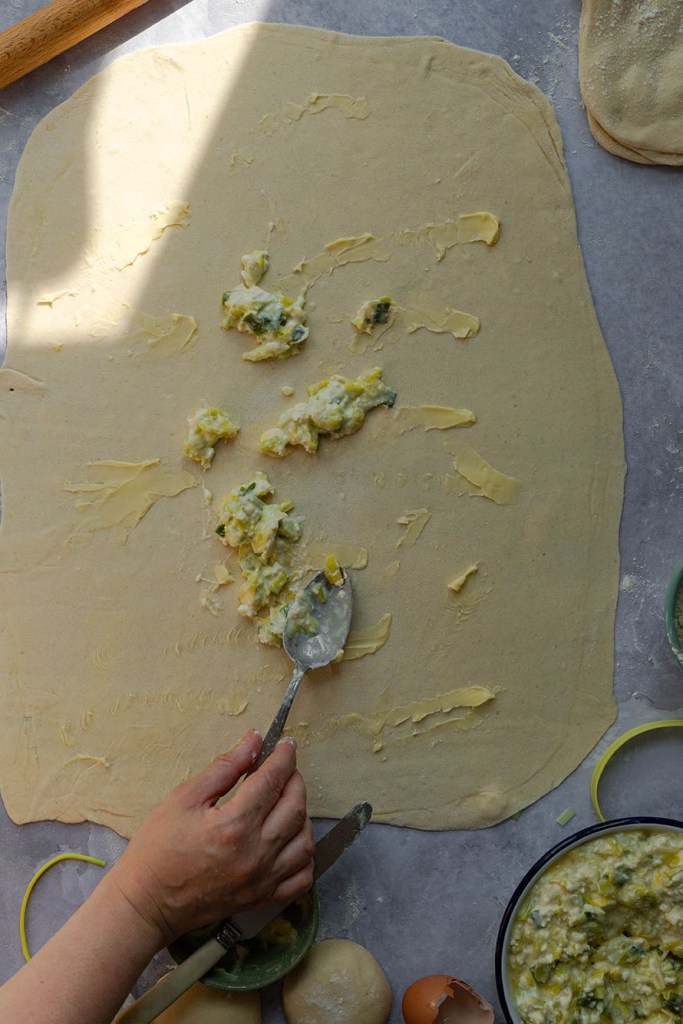
For best results, refer to the video provided for guidance on rolling out filo pastry sheets.
 Jelena Pop-Kostić
Leave a comment